



Koh Samui – “Coconut Island” is the third largest island in the Kingdom and one of Thailand’s most frequented destinations. Local business’s enjoy a steady flow of holiday visitor’s and homemakers year round. About 1 million per year according to a recent estimation.
20 years ago Samui was a backpackers haven with a single paved road ring around the island. Today it is a hustling mini-metro with McDonalds and movie theaters to boot. Despite making leaps and bounds in terms of “development’ the island suffers from a sever lack of infrastructure and municipal planning. With no focus on sustainability Samui takes queue in a long line of rapidly overdeveloped tourist destinations. A frequent pattern which results in short term profits for initial investors but leads to environmental disaster decades later. By the time the construction dust finally clears the investors will have moved off to the next gold mine. Leaving baffled locals to deal with a polluted mess no tourist will visit. Samui’s fate will be no different if corrective action is not taken.
| Rivers of sediment pick up raw sewage from over flowing septic tanks and other nutrient rich sources. The eutrophic mix in turn settles in a thick layer of sediment and algae smothering the corals of the islands fringing reef. | 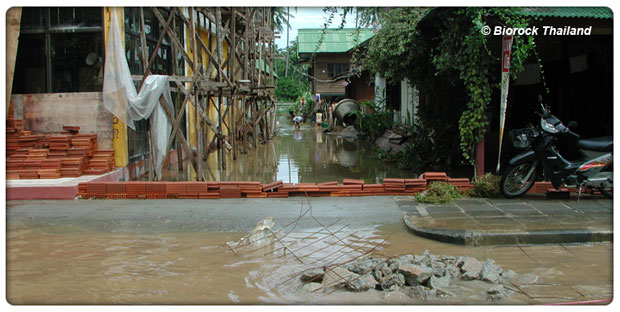 |
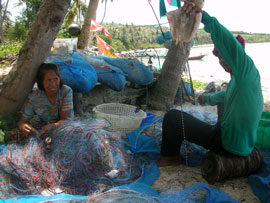
Sustenance fisherman are just one of the many local groups suffering from the results of overdevelopment. The fringing reef encompassing most of the island was once bubbling with marine life of every sort. The existence of many marine species is intricately linked to the local reef system. Fish for example require it as a source of food and shelter from larger predators. Without it they can not survive in their juvenile state.
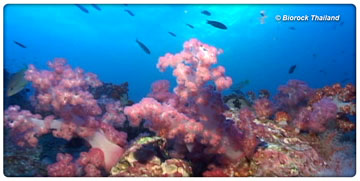 |
Healthy coral reefs are essential for the survival of marine ecosystems. Fish and other marine species populations are dependent on the reef system as a source of food and habitat. |
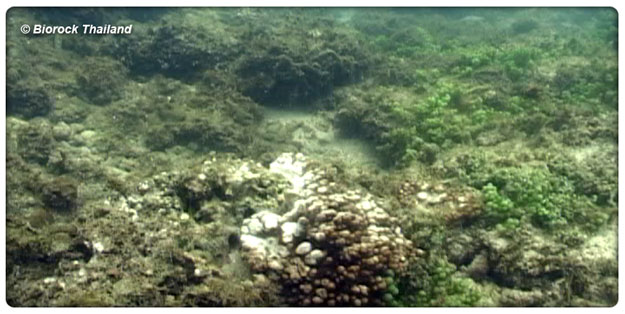
Today the reef flat is a nutrient rich algae field fed by raw sewage and buried in sediment runoff. The once vibrant reef is now sparsely dotted with patches of corals vying for the last survivable positions on the outer edge. This appalling condition is the direct result of unsustainable development practices which are now common-place and considered acceptable.
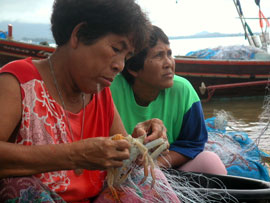
In recent years, effects of the alarming decrease in local fish stocks began to be felt by local fisherman who used to fish in the immediate vicinity of the island. Fisherman are now forced to travel further out to sea in order to achieve adequate catches. Offshore trawlers, often practicing illegal fishing methods, augment the problem and further deplete the already over exploited Gulf of Thailand.
 |
 |
By mid October 2005 local officials had decided on proactive measures to combat the problem and initiated a Fishery Habitat and Coral Restoration Project. The initiative would begin the process of restocking fish populations in designated areas.
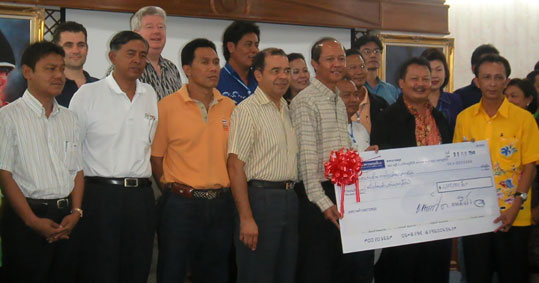
Together with the Tourist Association of Koh Samui (TAKS), Biorock Technology Thailand was commissioned to design, construct and deploy five fishery habitat restoration sites around the island. (background story)